Chimney Cap Installation & Repair in Atlanta, GA
A chimney cap covers the flue opening while allowing the system to vent. A properly sized cap can help keep direct rain, leaves, birds, and animals out of the flue. Missing, damaged, or poorly fitted caps should be evaluated along with the crown, flashing, and masonry when a chimney has water or animal-entry problems.
Our office will confirm your requested visit time.
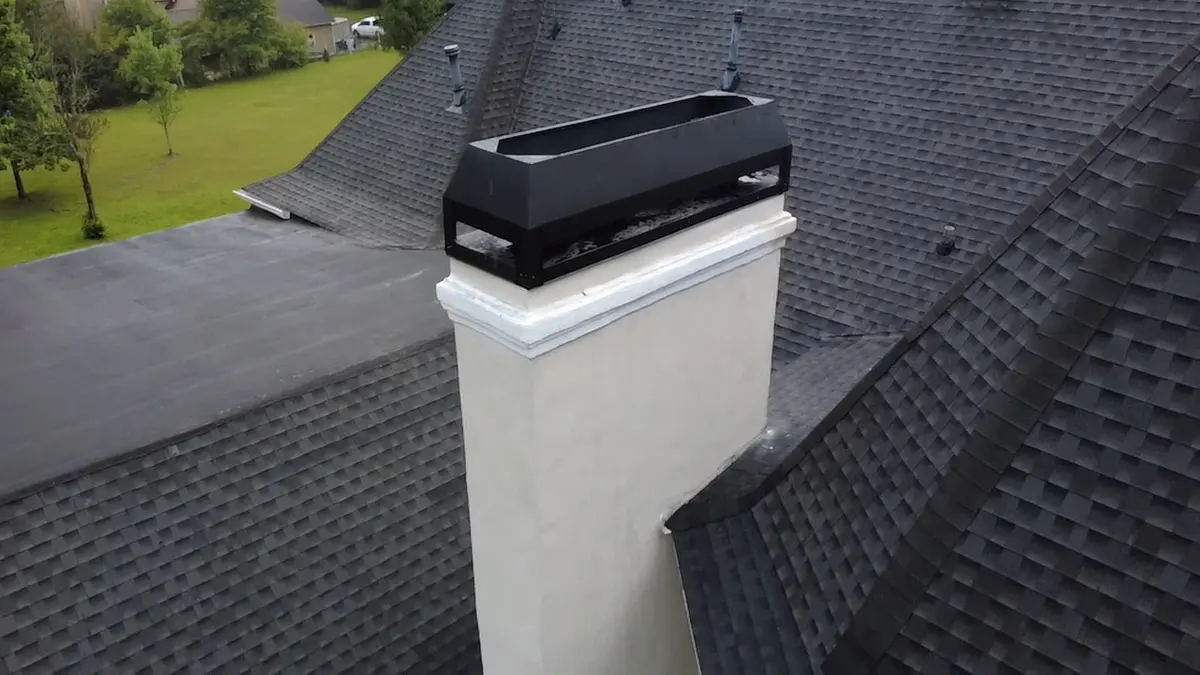
Chimney Cap vs. Crown vs. Chase Cover
A chimney cap covers the flue opening. A masonry chimney crown sheds water from the top of the chimney structure. A chase cover is the metal top used on many framed factory-built chimney chases. Identifying which component is failing prevents replacing the wrong part.
Compare with chimney leak repairCommon Chimney Cap Installation & Repair Problems
- No cap at all, leaving the flue wide open to rain and animals
- Rusted galvanized caps staining the chimney and failing
- Loose or storm-damaged caps that have shifted or blown off
- Mesh too damaged to keep out birds and squirrels
- Caps sized wrong for the flue, leaving gaps
Signs You May Need This Service
- You can see daylight or open sky when looking up the flue
- Rust streaks running down the chimney from the cap
- Birds, squirrels, or raccoons entering the chimney
- Water or debris in the firebox after a storm
- The cap is visibly missing or tilted from the ground
Our Chimney Cap Installation & Repair Process
- 1
Measure the flue and confirm the correct cap size and style
- 2
Review stainless steel, copper, and compatible cap options for the specific flue
- 3
Secure installation with proper clearance and mesh screening
- 4
Remove and dispose of the old, failed cap
- 5
Verify the flue drafts and is fully protected
Real Project Photos
See chimney cap installation & repair conditions and completed work from ATL Chimney projects.
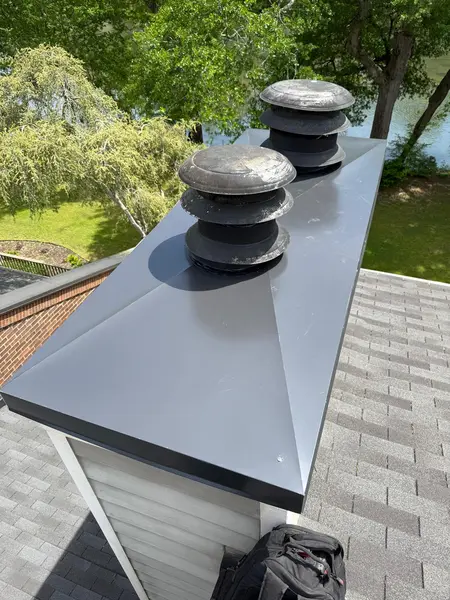
Custom chase cover protecting a multi-flue chimney system.
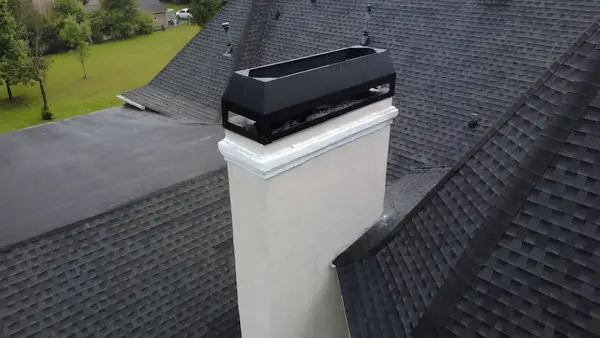
Installed multi-flue chimney cap viewed from roof level.
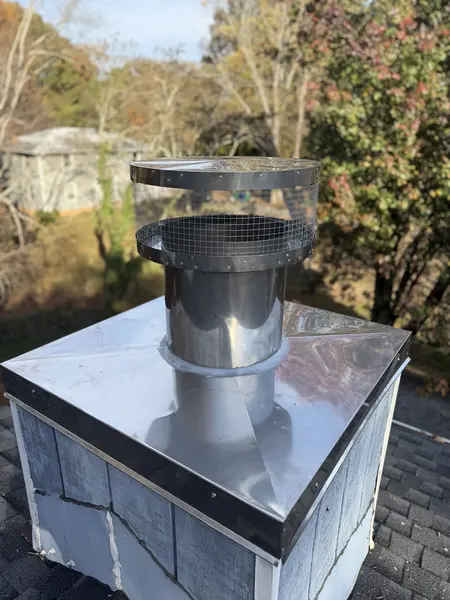
Chimney liner top plate and rain cap at the chimney top.
Serving the Atlanta Metro Area
Atlanta rain, humidity, wind, and tree cover can expose chimney caps to corrosion, debris, and animal activity. Cap material, mesh, attachment, dimensions, and clearance all matter, so the replacement should be selected for the specific flue rather than by appearance alone. For local conditions and service options, read about chimney service in Dunwoody, where the guide covers tree debris and cap condition, or chimney service in Sandy Springs for cap, chase-cover, and moisture concerns.
Chimney Cap Installation & Repair FAQ
What is the best chimney cap material for Atlanta?
How much does chimney cap installation cost?
Can a chimney cap cause drafting problems?
Do you repair a cap or replace it?
Ready to Schedule Chimney Cap Installation & Repair?
Call ATL Chimney or send an online service request. We will document relevant findings, explain the recommended scope, and provide pricing before approved repair work begins.