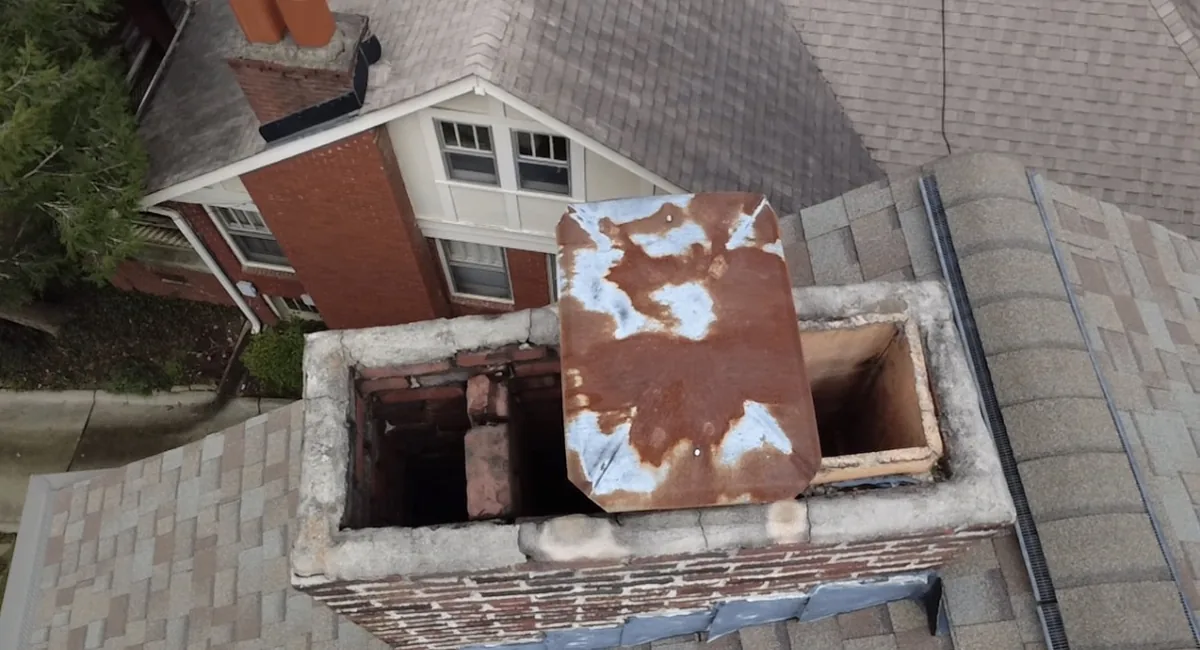
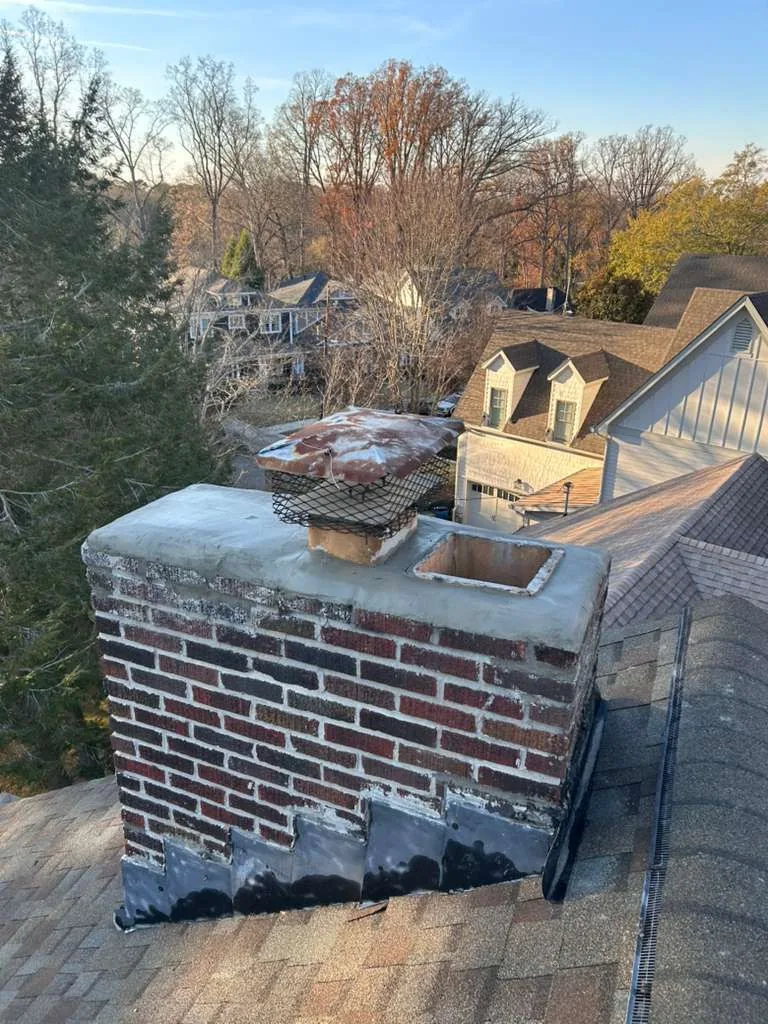
Chimney leaks can come from several different places: roof flashing, the crown, cap, mortar joints, or absorbent masonry. Heavy rain around Atlanta and Marietta can expose small defects that are hard to diagnose from the stain alone. ATL Chimney starts by tracing the likely entry point so the recommended repair targets the source instead of automatically treating the masonry.
Our office will confirm your requested visit time.
Chimney Leak Repair vs. Waterproofing
Leak repair targets the component allowing water in — such as flashing, a crown crack, cap damage, or failed mortar. Waterproofing serves a different purpose: reducing water absorption through sound masonry. Diagnosing the entry point first helps avoid using waterproofing as a substitute for a repair the chimney actually needs.
Failed or rusted step and counter flashing at the roofline
Cracked chimney crown allowing water into the masonry
Missing, damaged, or poorly fitted chimney cap
Porous or deteriorated brick and mortar absorbing moisture
Condensation or venting conditions that can mimic a rain leak
Signs You May Need This Service
Water stains on the ceiling or wall next to the fireplace
Dampness or efflorescence on the chimney brick
A musty smell near the fireplace after rain
Peeling paint or bubbling drywall around the chimney
Dripping sounds in the flue during a storm
Our Chimney Leak Repair Process
1
Inspect visible leak paths and moisture evidence
2
Separate flashing, crown, cap, mortar, and masonry-absorption issues
3
Recommend targeted repair of the failed component
4
Use breathable masonry waterproofing where absorption is part of the problem
5
Document findings, completed work, and follow-up recommendations
What to Share Before a Chimney Leak Visit
The history of a leak can help direct the evaluation. A stain or photograph is useful evidence, but it does not establish the source on its own.
Describe when water appears
Note whether it happens during every rain, only during wind-driven storms, or even in dry weather. Describe whether water appears in the firebox, on surrounding walls, in the attic, or at the ceiling.
Bring previous repair details
Share any existing photos, inspection reports, and records of roof, flashing, crown, or sealing work. Include when the symptom started and whether a previous repair changed it. There is no need to climb onto the roof to prepare.
Ask what the estimate covers
The scope should identify the suspected entry point, proposed component repair, access needs, and any further evaluation. Clarify whether interior stain repairs are included or need separate attention; they are different from correcting the water source.
Real Project Photos
See chimney leak repair conditions and completed work from ATL Chimney projects.
Completed work
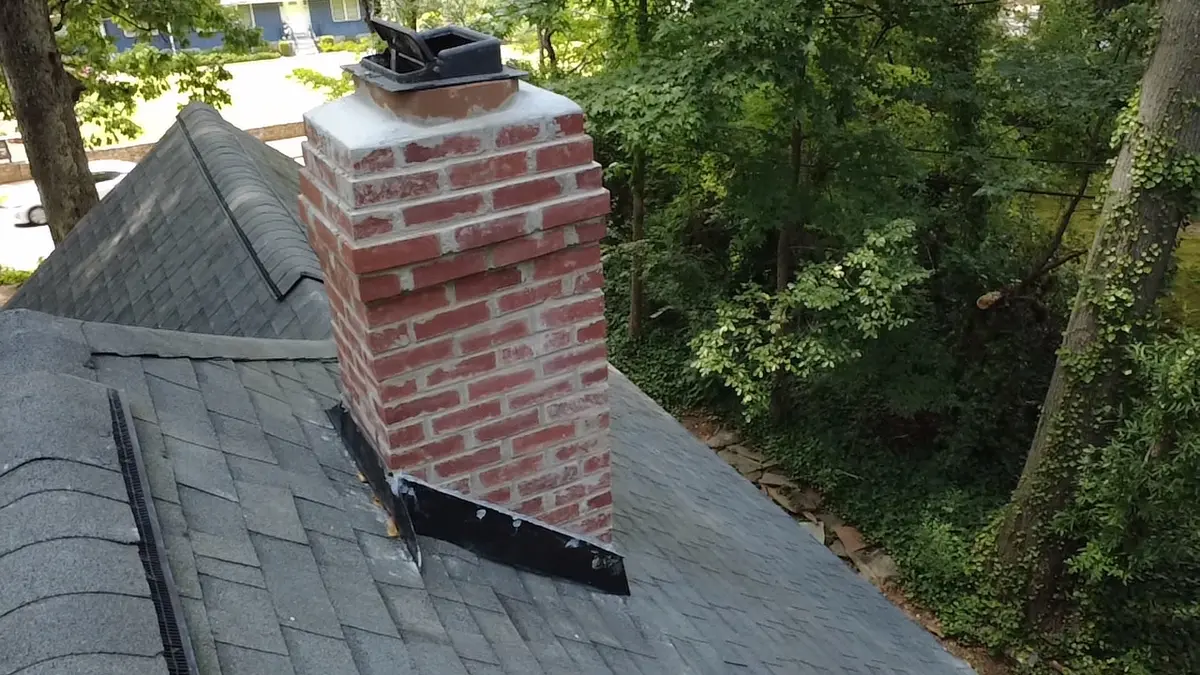
Completed masonry and roofline flashing work on a residential chimney.
Completed work
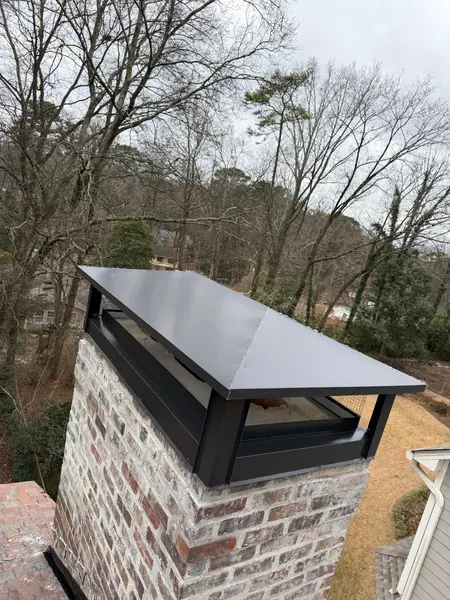
Custom metal chase cover fitted over a residential chimney chase.
Completed work
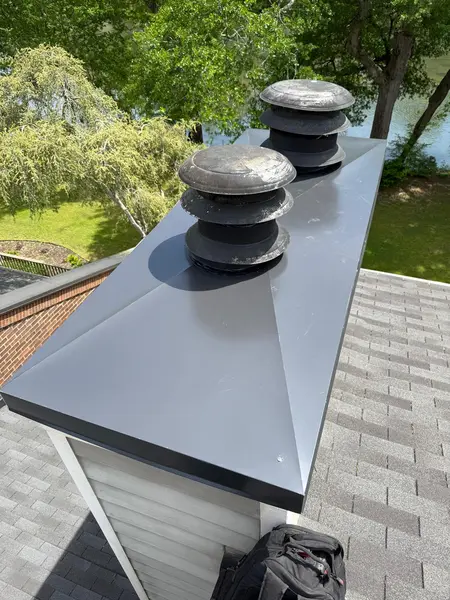
Custom chase cover protecting a multi-flue chimney system.
Project notes and before-and-after photos from our field work.
Leaking Chase Cover Replacement in Alpharetta
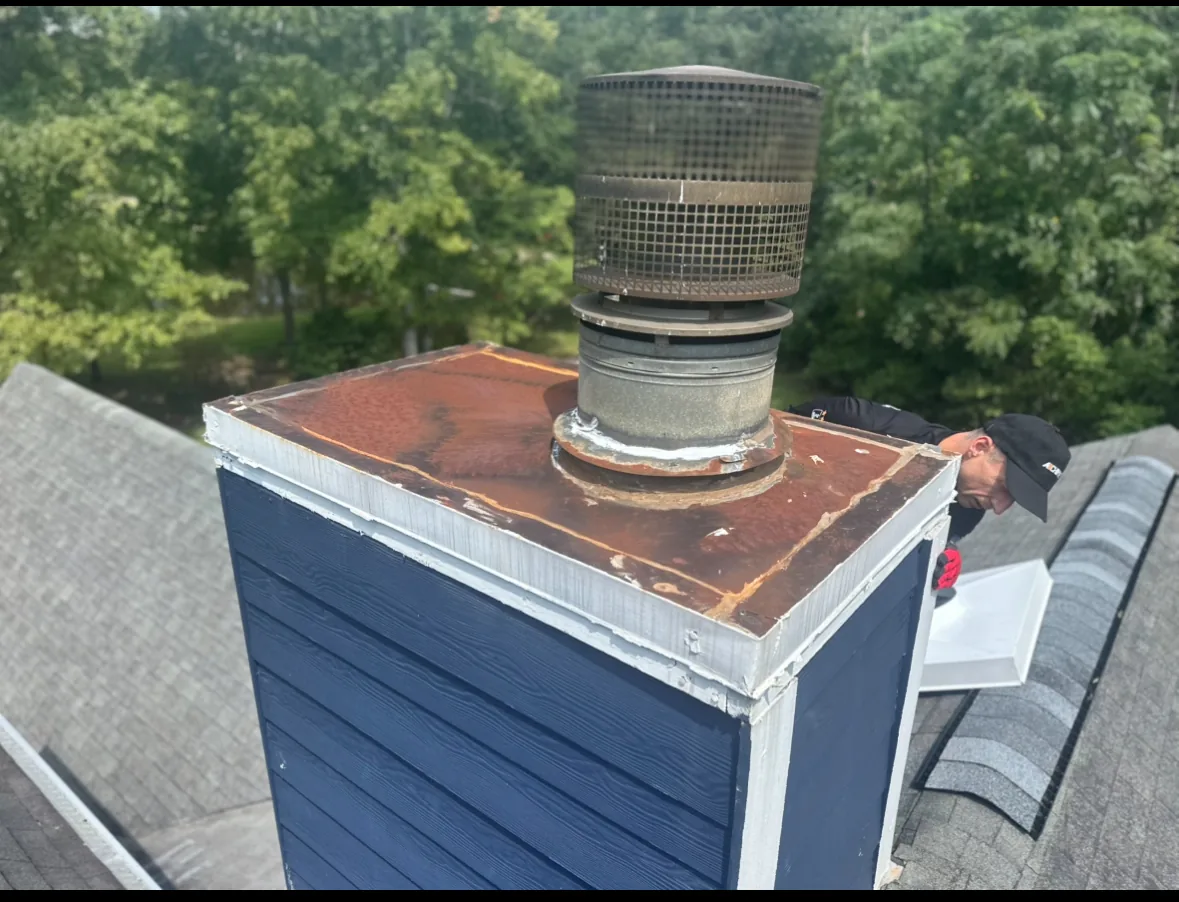
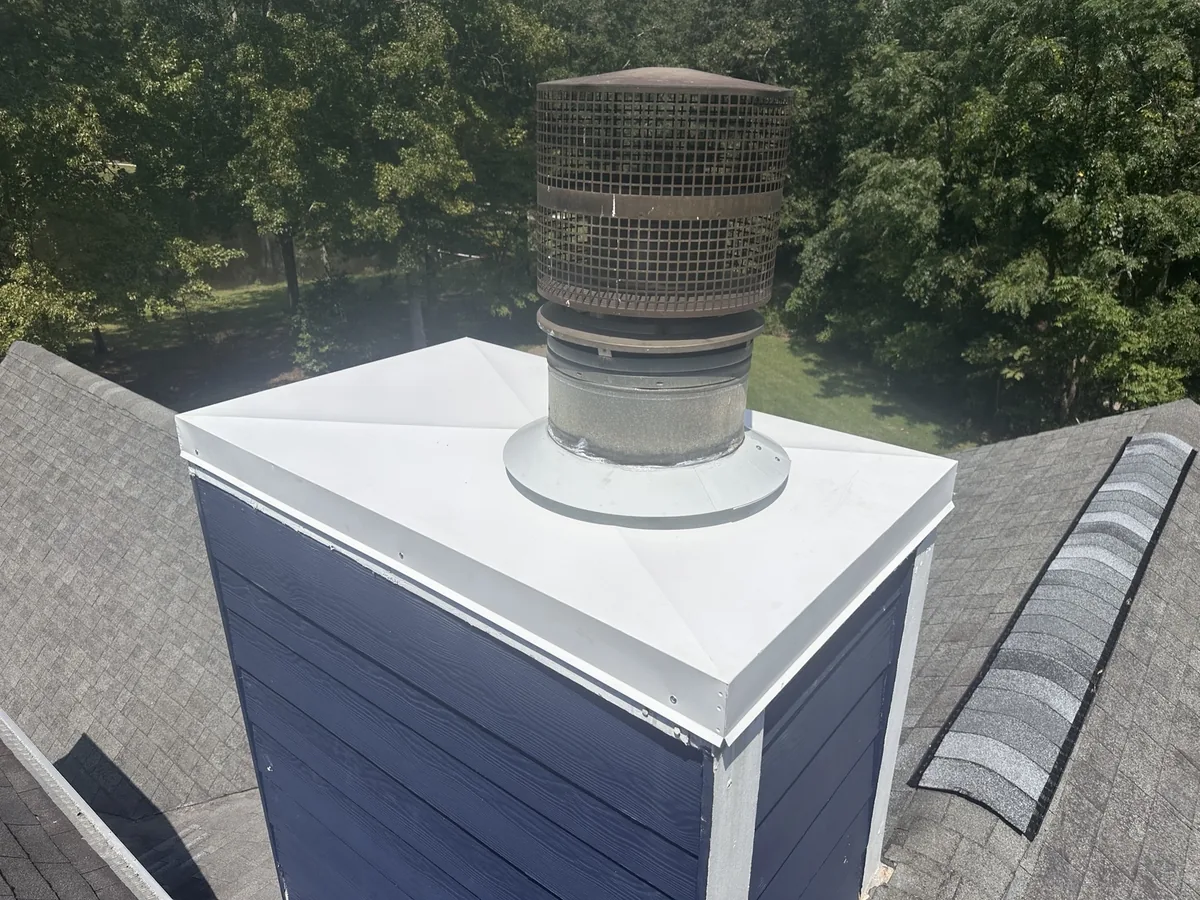
At an Alpharetta home, we replaced a chase cover that was leaking. The before photo shows the rusted cover on the blue-sided chimney chase; the after photo shows the new cover fitted around the round chimney termination.
Before — Rusted chase cover before replacement on an Alpharetta homeAfter — Replacement chase cover around the round chimney termination on the same Alpharetta home
These photos document the cover replacement. If you have a similar concern, note where water appears and whether it follows rain when requesting a leak evaluation.
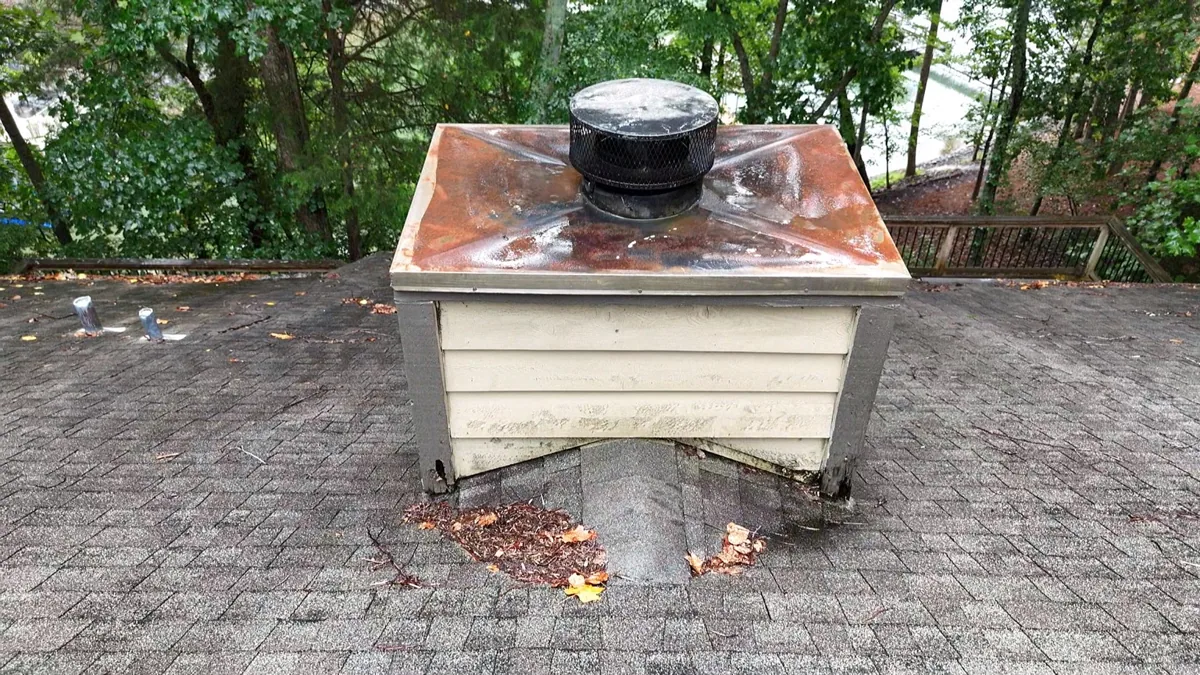
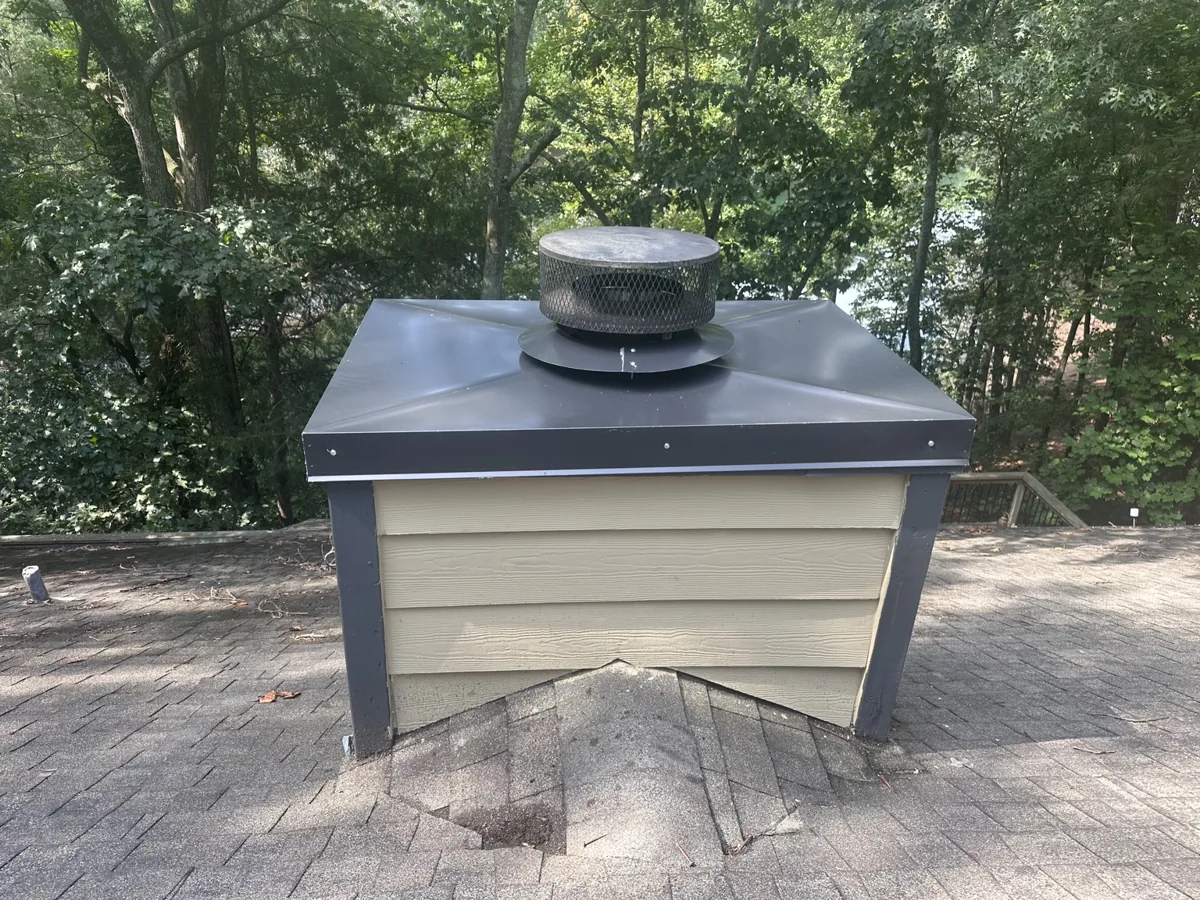
A Marietta homeowner reported water entering the home, a rusted chase cover and rotted trim. Our roof evaluation identified the chase cover as the source of the water entry. We replaced it with a better-fitting cover and repaired the resulting water damage, including the affected trim.
Before — Marietta chimney chase before repair with a rusted metal cover and deteriorated lower trimAfter — Same Marietta chase after cover replacement and repair of water-damaged trim
The repair addressed both the entry point and the damage it had caused. When reviewing a similar scope, ask whether damaged trim and other affected materials are included alongside the cover replacement.
An Atlanta homeowner reported water entering her home. On the roof, we found that the chimney had no crown covering the masonry around the flues and identified this as the source of water entry. We repaired the chimney top by adding the missing crown.
Before — Atlanta chimney before crown repair with open gaps around the clay fluesAfter — Same Atlanta chimney after a crown was added around the flues
The before photo shows a cap over one flue while the surrounding chimney top remains open. It illustrates the difference between a flue cap and a crown: they cover different parts of the chimney.
Atlanta and Marietta chimneys are exposed to heavy rain, humidity, and seasonal temperature changes. A leak can involve one component or several, so we evaluate flashing, crown, cap, mortar, and masonry absorption separately before recommending the repair scope. For local appointment guidance, see chimney leak evaluation in East Cobb. Our Sandy Springs chimney service guide also explains how chase-cover and masonry concerns affect the inspection scope.
Can a chimney with siding leak through the metal top?
Yes. Many factory-built chimneys sit inside a framed chase with a metal chase cover. Corrosion, a poor fit, damaged storm collars, or other failed transitions can allow water into the enclosure. The cover, surrounding siding, and accessible framing should be evaluated so the proposed work addresses the affected components. Masonry waterproofing is not a substitute for fixing a failed metal cover.
Why is my chimney leaking only when it rains hard?
Wind-driven rain can expose small gaps around flashing, the cap, crown, or masonry joints that may not show up during lighter rain. The visible stain does not always identify the actual entry point, so the surrounding components should be evaluated together.
Can a chimney leak be diagnosed without going on the roof?
Interior and attic evidence can help narrow down the source, but many leak components are at the roofline or chimney exterior. The inspection method depends on access, weather, roof conditions, and where the moisture is appearing.
Is chimney waterproofing always the right fix for a leak?
No. Waterproofing addresses moisture absorption through sound masonry. If water is entering through flashing, a crown crack, a missing cap, or failed mortar, that component should be addressed first. Waterproofing can then be considered when masonry absorption is also part of the problem.
How do I stop my chimney from leaking again?
The right solution depends on the source. The recommended scope may include flashing repair, crown or cap work, masonry repair, or breathable waterproofing. We explain the findings and available options before work moves forward.
What affects the cost of chimney leak repair?
Cost depends on the entry point, the number of affected components, roof access, material condition, and the repair scope. Flashing repair, a replacement cap, and masonry restoration are different jobs. Diagnosis comes before a repair recommendation, so the estimate addresses the observed condition rather than a generic leak package.
Call ATL Chimney or send an online service request. We will document relevant findings, explain the recommended scope, and provide pricing before approved repair work begins.